



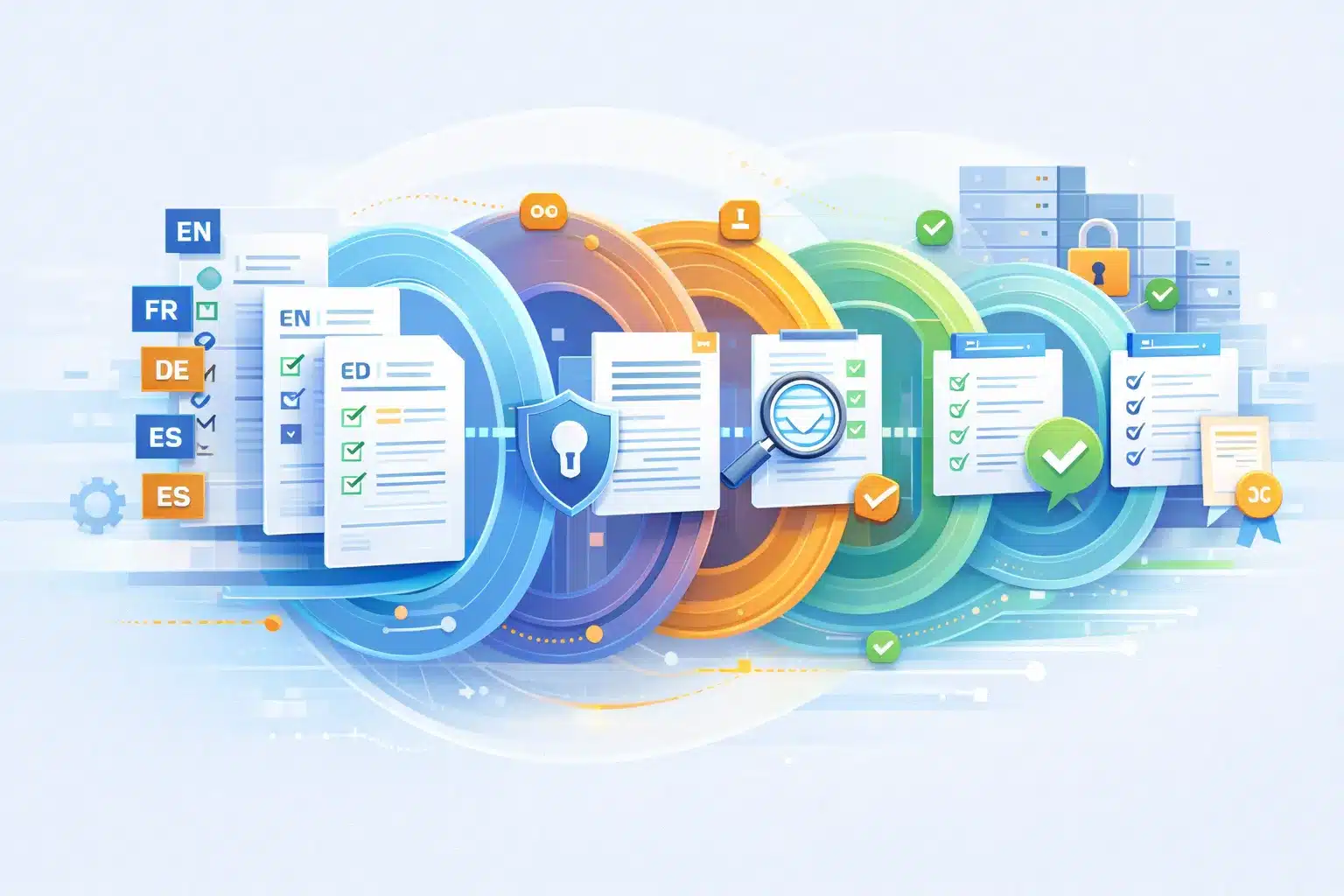
Compliance document translation is a specialized discipline within professional translation services, designed for organizations operating in highly regulated, high-risk environments.
Compliance translation deals with content that is legally binding, regulator-reviewed, and audit-critical. These documents are not translated for marketing or informational purposes alone. They are translated to meet statutory obligations, pass audits, and support risk-controlled operations across borders. This calls for a set of extra skills beyond general business translation.
The scope of compliance document translation typically includes compliance manuals, standard operating procedures (SOPs), certifications, safety documentation, regulatory filings, quality assurance and quality control (QA/QC) reports, audit documentation, HR compliance materials, data privacy policies, and technically complex operational content. Each document must retain its legal intent, technical precision, and structural integrity in every target language.
For enterprises in regulated industries, accuracy is non-negotiable. Translations must align with international standards, local regulatory frameworks, and industry-specific terminology, while remaining regulator-ready in both content and formatting.
As a result, compliance document translation is delivered as a B2B solution, designed for organizations that require defensible accuracy, controlled workflows, and verifiable quality rather than speed alone.
What is compliance document translation?
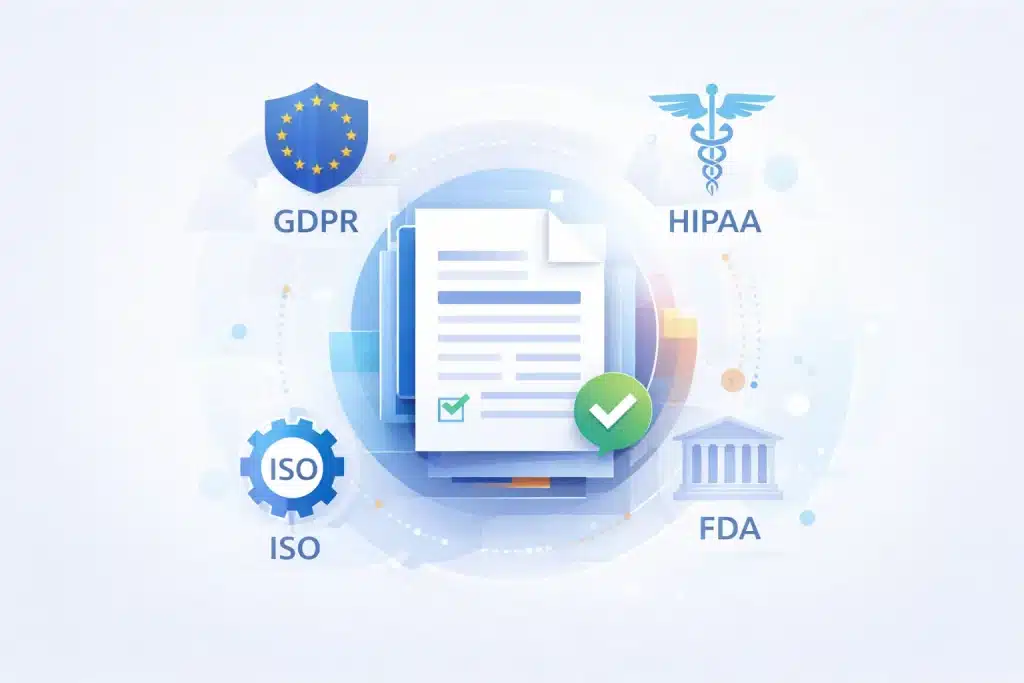
Compliance document translation refers to the professional translation of content that is governed by laws, regulations, standards, or formal compliance frameworks. It combines linguistic expertise with regulatory understanding, risk awareness, and structured quality controls to ensure translated documents remain compliant in every jurisdiction in which they are used.
This type of translation requires more than language fluency. Familiarity with frameworks such as GDPR, HIPAA, ISO standards, FDA regulations, OSHA requirements, and financial regulators, such as FCA and FINRA, is an absolute necessity. The goal is not only linguistic equivalence, but regulatory alignment and risk mitigation.
Typical examples of compliance translation include:
- GDPR privacy notices
- safety data sheets
- internal corporate policies
- audit trails, certification documentation
- regulator-facing reports
In each case, mistranslation can lead to compliance gaps, audit findings, or legal exposure, making specialist handling essential.
Why does regulatory compliance require specialist translators?
Regulatory compliance content cannot be entrusted to general translators because the stakes are fundamentally different. Compliance documents carry legal, operational, and financial implications, and are often reviewed by auditors or regulators rather than end users.
Specialist translators understand industry-specific terminology, compliance structures, and the consequences of ambiguity. They work within auditable workflows and ensure traceability, consistency, and alignment with applicable regulations. This is why regulated translations rely on vetted professionals with domain expertise.
Industries that typically require specialist compliance translation include healthcare, pharmaceuticals, financial services, insurance, energy, aviation, manufacturing, government, and technology. In these sectors, a specialized compliance translator is a non-negotiable.
Which compliance documents need professional translation?
Compliance document translation covers the materials that regulated organizations use to meet legal and industry requirements. This includes compliance manuals, internal control frameworks, standard operating procedures, and instructions that define governance and guide behavior, making clarity and consistency across languages essential.
Contractual and privacy-related documents are another core category. Service level agreements, compliance clauses, and HIPAA- and GDPR-regulated materials such as privacy notices and consent forms must retain their legal meaning and enforceability, as even minor translation errors can create legal or compliance risk.
Safety, environmental, workforce, and audit documentation also require professional translation. Safety data sheets, environmental records, HR compliance policies, training materials, audit reports, and quality documentation must remain clear, traceable, and regulator-ready across regions.
Risk and regulator-facing materials, such as risk registers, incident response plans, regulatory filings, certifications, and inspection records, demand the same level of precision, as they are often reviewed directly by regulators.
Across all document types, consistent terminology, controlled formatting, and regulatory awareness are essential to maintaining compliance integrity.
What risks arise from inaccurate compliance translations?
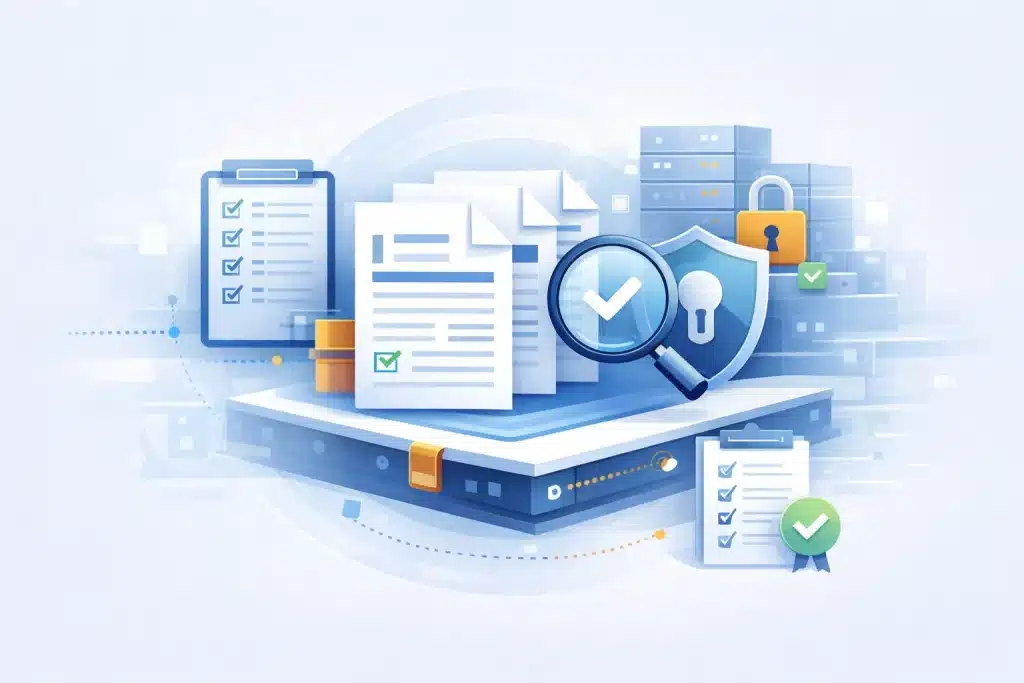
Compliance documents directly govern behavior, oversight, and regulatory reporting; inaccuracies in translation can introduce significant organizational risk. Common consequences include audit failures, regulatory non-compliance, financial penalties, certification rejection, legal disputes, and operational disruption.
Even minor mistranslations can distort safety requirements, internal controls, or statutory obligations, leading to inconsistent enforcement, employee non-compliance, or misalignment with regulator expectations across regions. In regulated environments, these issues often compound quickly once identified during audits or inspections.
For this reason, compliance translation is treated as a risk-management and governance function requiring controlled processes, subject-matter expertise, and defensible quality assurance.
How compliance translation works (methodology & workflow)
Professional compliance translation follows a structured, multi-step workflow designed to ensure accuracy, traceability, and regulatory readiness. At its core, the workflow includes:
- Text extraction and format assessment
- Translation by subject-matter expert linguists
- Bilingual editing and independent review
- Regulatory alignment and compliance checks
- Linguistic and technical quality assurance
- Formatting, DTP, and layout validation
- Final verification and delivery
Each checkpoint is mandatory in regulated environments, ensuring errors are identified and corrected before delivery.
Who works on compliance document translation? (Roles & vetting)
Compliance document translation is handled by a multidisciplinary team rather than a single translator.
At the core are compliance linguists with industry specialization, supported by legal or technical subject-matter experts who validate regulatory intent and terminology. Editors and independent reviewers provide an additional layer of scrutiny, while compliance QA specialists ensure that accuracy, consistency, and formatting meet regulatory expectations throughout the project. Dedicated project managers who coordinate workflows, timelines, and quality controls oversee each step.
All contributors typically operate within ISO-aligned processes and have documented experience working with regulated content. This structured vetting and role separation ensures that translated compliance documents maintain both linguistic accuracy and regulatory credibility.
How do we maintain regulatory accuracy across languages?
Regulatory accuracy is maintained through structured terminology management, including approved glossaries, style guides, and translation memory reuse. Linguists reference regulatory texts, industry standards, and previously approved content to maintain consistency.
This approach supports compliance terminology translation by ensuring key terms, definitions, and obligations are rendered consistently across all markets and languages.
How do we ensure confidentiality and data protection?
Regulated industries require strict data governance and confidentiality controls to ensure compliance. Compliance translation workflows, therefore, incorporate non-disclosure agreements, encrypted file transfer protocols, restricted system access, and clearly defined data retention policies.
These processes are aligned with privacy and data protection regulations such as GDPR and HIPAA, ensuring secure handling of sensitive information throughout the entire project lifecycle.
What formats and platforms do enterprises use for compliance translation?
Enterprises submit compliance content in a wide range of formats. These include:
- PDF, DOCX, XLSX, and PPT
- XML and structured regulatory files
- InDesign and other DTP formats
- eLearning modules within LMS platforms
- Internal policy portals and GRC systems
Integration with enterprise governance, risk, and compliance platforms supports scalable, repeatable translation programs.
Compliance translation for regulated industries (sector breakdown)
Different industries face distinct regulatory obligations, documentation requirements, and compliance risks. Compliance translation must be adapted accordingly.
Financial services & banking compliance translation
Financial institutions require translation of AML and KYC policies, risk disclosures, audit reports, investor communications, and regulator filings. Regulatory frameworks such as FINRA, SEC rules, the Basel Accords, and FCA guidance directly shape both the content and terminology used in these materials.
As a result, translations must preserve regulatory intent, technical precision, and legal enforceability to ensure consistent compliance across jurisdictions.
Healthcare & medical compliance translation
Healthcare compliance translation includes HIPAA documentation, patient rights materials, laboratory certifications, safety protocols, and clinical compliance policies.
Terminology alignment with established medical standards is thus essential to ensure clarity and legal defensibility in healthcare and medical compliance translations.
Pharma, biotech & life sciences compliance translation
Life sciences organizations rely on translated GMP and GxP documentation, regulatory submissions, safety reports, and manufacturing protocols.
Because these documents are reviewed by health authorities and auditors, translations must preserve technical accuracy, procedural clarity, and regulatory intent to avoid delays, findings, or enforcement actions.
Manufacturing, energy & industrial compliance translation
Industrial compliance translation covers OSHA documentation, ISO safety standards, environmental compliance records, equipment manuals, and SDS/MSDS files.
Accuracy directly impacts workplace safety and regulatory adherence. Which is why industrial compliance translation demands precise terminology and strict quality controls.
Technology & data privacy compliance translation
Technology companies require translation of GDPR documentation, SOC 2 reports, ISO 27001 policies, cybersecurity procedures, and data handling guidelines.
These documents underpin trust, audits, and contractual compliance. Translations must preserve regulatory intent, technical precision, and consistency in terminology to withstand scrutiny from regulators, partners, and enterprise clients.
Why choose our agency for compliance document translation?
Circle Translations delivers professional translation services built on precision and reliability. We handle your translation needs with meticulous attention to detail, ensuring every document is accurately rendered for your target markets. Beyond translation, we offer DTP, proofreading, and editing services to polish your final deliverables. With 120+ language pairs and proven expertise across global markets, we ensure your content is culturally appropriate and professionally executed, no matter where your audience is located.
What differentiates us from generalist translation vendors?
We solve real business problems instead of offering one-size-fits-all solutions. Every project gets a custom approach tailored to your specific requirements and timelines. We’re responsive, technology-driven, and focused on efficiency. Adept at using the latest tools to maximize accuracy and consistency while keeping your involvement and costs minimal. Our clients consistently praise our fast turnaround, deadline reliability, and competitive pricing. We understand that every business is different, and we act accordingly.
What deliverables do clients receive?
Clients receive complete, audit-ready deliverables, including:
- Final translated documents
- Bilingual review files
- Approved terminology lists
- Compliance QA reports
- DTP-ready formatted files
- Revision and change logs
How we scale compliance translation for global enterprises
For multinational organizations, we support centralized translation programs using translation memory reuse, standardized terminology, multi-market rollout strategies, and consolidated rate cards. This ensures consistency, cost control, and governance across regions.
RFP Checklist for Compliance Translation Vendors
When evaluating compliance translation vendors, consider the following:
- Proven experience in regulated industries
- Documented QA and review workflows
- Data security and privacy compliance
- Access to subject-matter experts
- Transparent terminology management
- Clear pricing and revision policies
Conclusion
In regulated environments, translated compliance documents function as operational records, not supporting materials. They are used to guide behavior, demonstrate conformity, and withstand external review. Any loss of precision in translation, therefore, becomes a compliance variable.
Organizations that treat compliance translation as a controlled process supported by subject-matter expertise, validated terminology, and structured review reduce interpretive risk across jurisdictions. Those that do not introduce avoidable uncertainty into audits, certifications, and regulatory interactions.
In practice, compliance document translation directly influences how consistently requirements are understood and how defensible compliance positions remain at scale.
Compliance Document Translation — FAQs
What is compliance document translation?
It is the translation of documents governed by laws, standards, or regulatory frameworks such as GDPR, HIPAA, FDA, ISO, OSHA, and FCA. These documents require specialist linguists, terminological consistency, and audit-ready formatting.
Which industries need compliance translation?
Heavily regulated sectors such as finance, healthcare, pharma, biotech, government, energy, aviation, manufacturing, and technology rely on compliance translation for internal controls and regulator-required documentation.
What types of documents fall under compliance translation?
SOPs, policies, SLAs, internal controls, quality manuals, audits, certificates, regulatory filings, training materials, safety documentation, privacy notices, risk guidelines, and incident response protocols.
Why should compliance content not be translated with generic MT?
Compliance documents carry legal and operational consequences. Automated translation may misinterpret regulatory terminology, increasing audit, legal, or operational risk. Human SME review is essential.
How is accuracy maintained in compliance translation?
Through specialist linguists, validated terminology, bilingual review, regulatory checks, structured QA frameworks, translation memory reuse, and consistency controls across all languages.
What are the confidentiality requirements for compliance translation?
NDAs, encrypted data transfer, restricted access, secure portals, and privacy alignment with regulations such as GDPR and HIPAA are standard requirements.
How do I get an accurate quote for compliance document translation?
Provide details on document type, industry, file format, target languages, deadlines, applicable compliance standards, and any certification or DTP requirements. Sharing sample pages improves quote accuracy.